
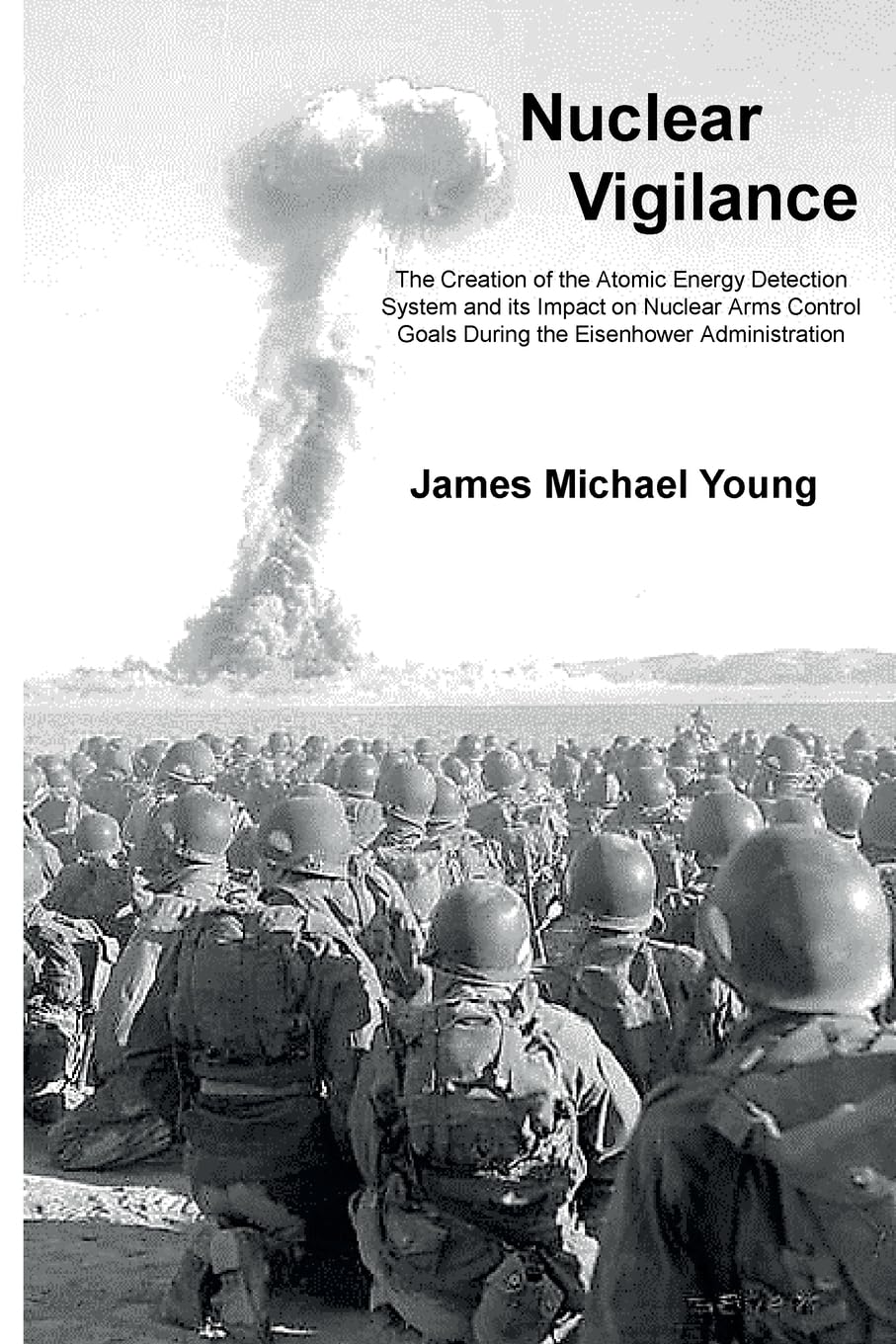
Nuclear Vigilance: The Creation of the Atomic Energy Detection System and its Impact on Nuclear Arms Control Goals During the Eisenhower Administration
Product details
| Management number | 231989461 | Release Date | 2026/06/18 | List Price | US$9.44 | Model Number | 231989461 | ||
|---|---|---|---|---|---|---|---|---|---|
| Category | |||||||||
In 1945, the United States exited the Second World War as the sole possessor of nuclear weapons. As the Cold War began, tensions between East and West mounted when communist expansionism quickly spread throughout Eastern Europe. By 1946, the most important national security question was: when would the Soviet Union acquire a nuclear capability? With U.S. human intelligence assets incapable of penetrating the secretive Soviet nuclear weapons program, America’s political and military leaders turned to technology to answer the question. In 1947, the U.S. Air Force assumed responsibility for creating a system capable of monitoring any nuclear detonation within the Soviet Union. Uncertainty about Soviet nuclear advancements compelled the Air Force to staff a small, highly classified unit with some of America’s most talented scientists. These people were experts in the fields of seismology, nuclear physics, radiochemistry, acoustics, atmospheric sciences, and several other geophysical disciplines. The result was the creation of the Atomic Energy Detection System (AEDS). In 1949, the Soviet Union conducted its first nuclear weapons test. The AEDS, while still under development, detected the detonation. This success immediately validated the Air Force’s Long Range Detection (LRD) mission. From that point on, and throughout most of the 1950s, the AEDS became the nation’s primary surveillance system for monitoring nuclear weapons testing. This first part of the narrative details how the Air Force embraced unprecedented levels of innovation to harness new sciences for the invention of instruments capable of conducting LRD. The second part reveals how LRD scientists played a key role in nuclear treaty negotiations during President Eisenhower’s second term in office. Their direct involvement resulted in the derailment of Eisenhower’s strong attempt to negotiate a comprehensive nuclear test ban treaty with the Soviet Union. Read more
| ISBN10 | 1312424532 |
|---|---|
| ISBN13 | 978-1312424531 |
| Language | English |
| Publisher | Lulu.com |
| Dimensions | 5.98 x 1.11 x 9.02 inches |
| Item Weight | 1.44 pounds |
| Reading age | 1 year and up |
| Print length | 491 pages |
| Publication date | July 5, 2023 |

Bestseller ranking
SiriusXM


Customers who viewed this product also viewed
Nuclear


Correction of product information
If you notice any omissions or errors in the product information on this page, please use the correction request form below.
Correction Request Form